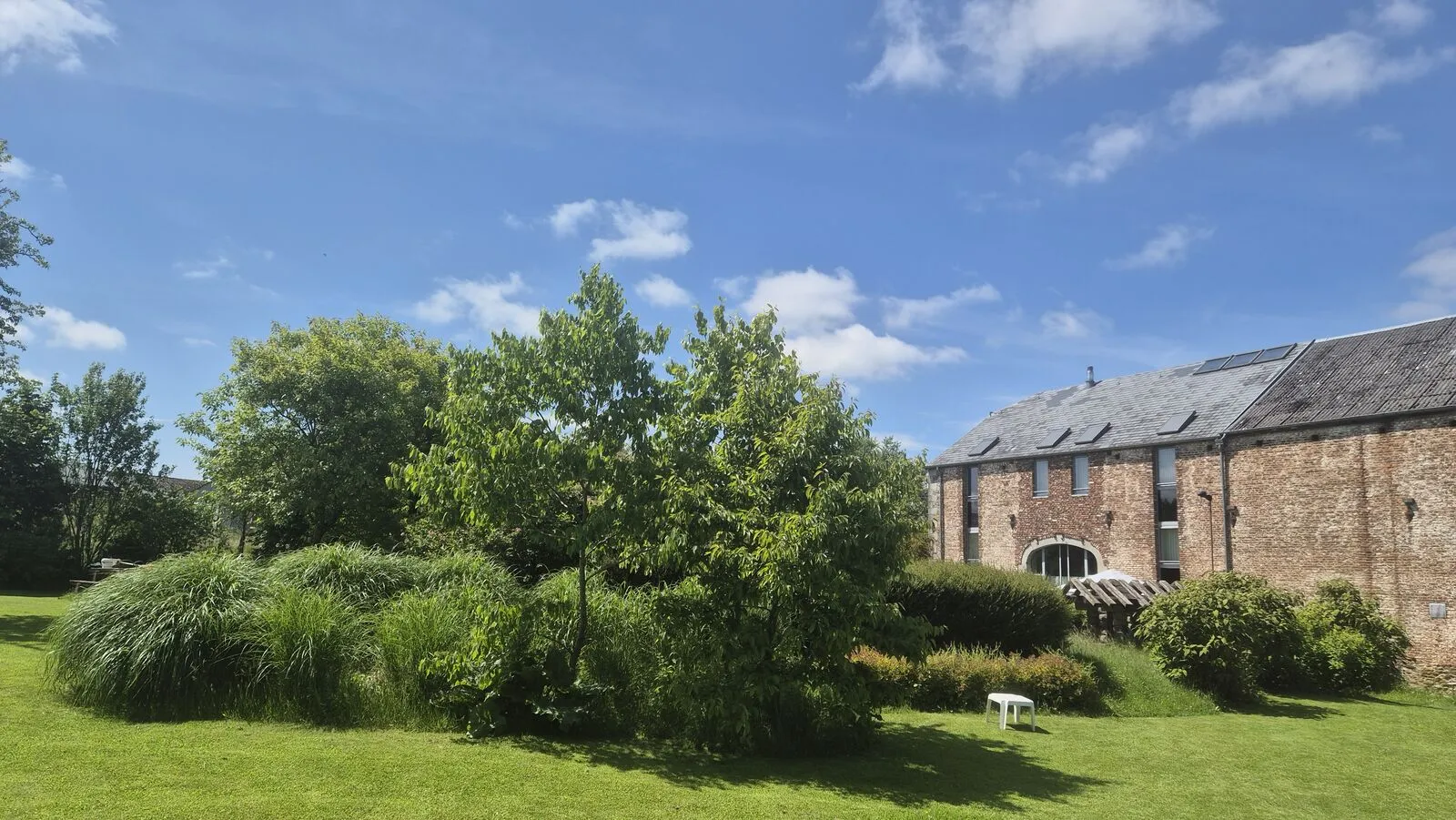
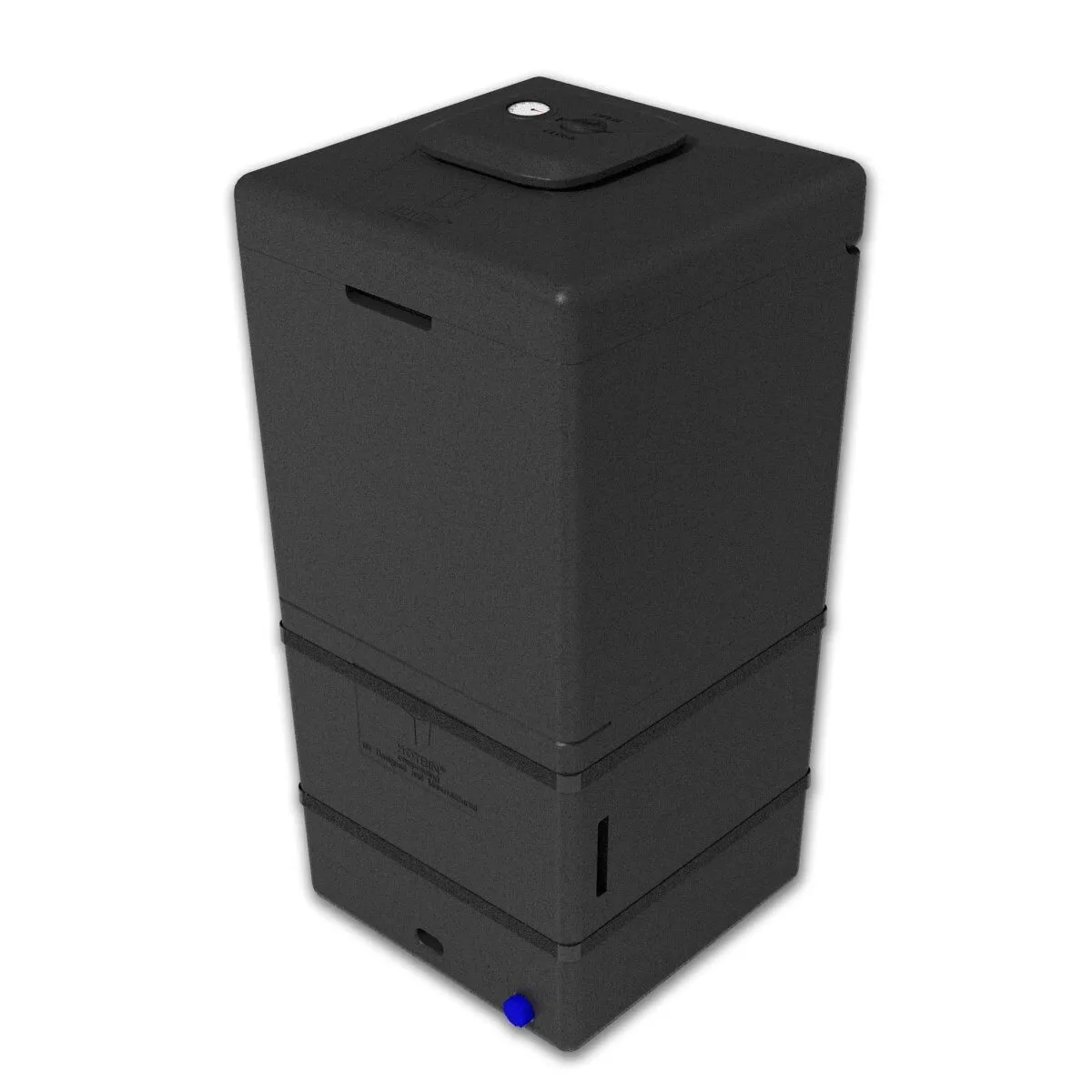
We are switching from chickens to composting. All the garden waste from your stay now goes into an insulated 200-litre HOTBIN composter, in the middle of our 2-hectare garden in Malvoisin (Gedinne).
The white stool in the photo marks the spot where our HOTBIN will stand. During your stay you learn to compost yourself, and the children take home compost for their own little vegetable garden.
From chickens to compost
For years our chickens kept the kitchen waste down. But keeping chickens responsibly is no longer possible here: the fox dares to take them even in broad daylight. So we now choose a method that works all year round, stays odour-free and asks nothing when nobody is around — a hot composter.
The result goes straight back to the vegetable garden and the borders. That keeps the cycle closed within ArdenNest, and your children see exactly what happens to the waste.
How the 200-litre HOTBIN works
The HOTBIN is an insulated composter that reaches 40 to 60 °C without electricity. That lets it compost up to 32 times faster than an ordinary heap — the first compost is ready after 30 to 90 days.
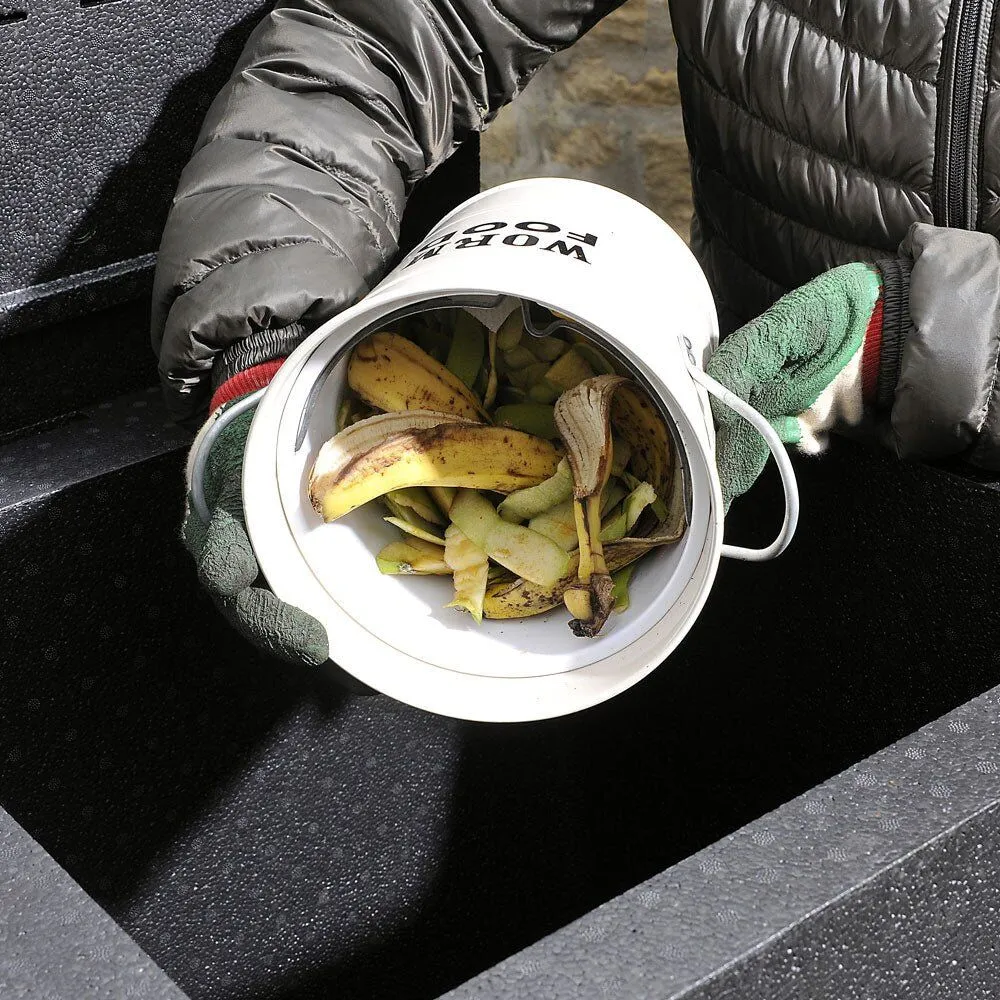
Add. vegetable, fruit and garden waste goes in every few days.
Mix. together with wood chips and some cardboard for air and the right moisture balance.
Let it heat up. the insulation holds the warmth, the micro-organisms do the rest.
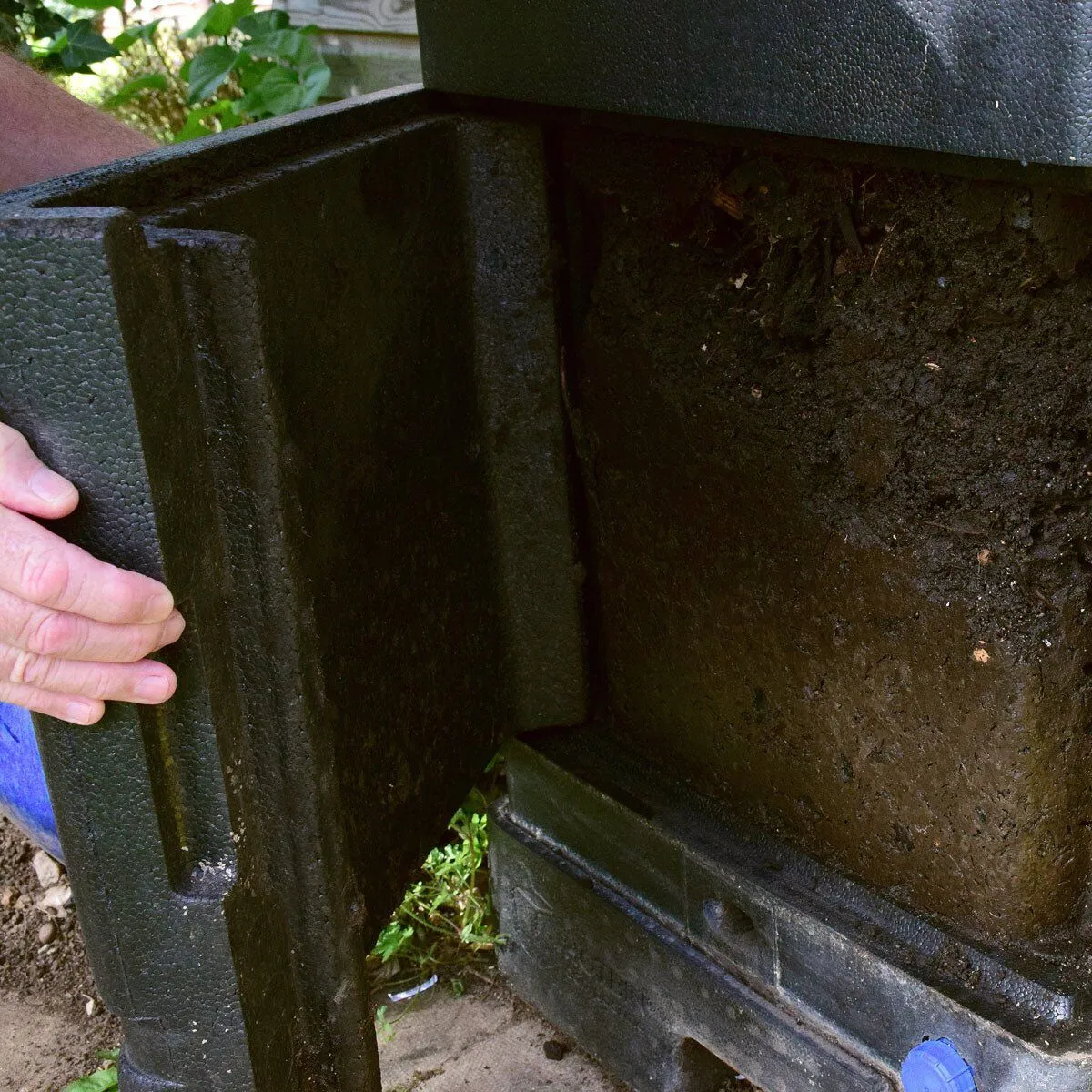
Harvest. after 30 to 90 days you take rich compost out through the hatch at the bottom.
Join in during your stay
Here composting becomes an experience, not a hidden bin. At the back of the composter a large information board explains everything. That way you gradually learn to compost yourself.
Add chips and wood yourself. material is ready next to the bin — children love to help.
Read the board. at a glance you see what may and may not go into the bin.
Take a bag of compost. for the children we provide little bags of compost to take home, for their own little vegetable garden.
Less waste, lower costs for you
We weigh the waste from every stay. At many group houses everything goes into the container together and you help pay a hefty waste bill. By composting we cut the residual fraction sharply, keeping that cost low — so composting is good for the garden and for your wallet.
Part of our Green Key label
Our composting project does not stand on its own: it is an integral part of our Green Key label, the international eco-label for sustainable tourism that ArdenNest holds (valid until July 2027). Waste management is one of the Green Key criteria we are assessed on every year — the HOTBIN is our most visible answer to it.
We bought our HOTBIN 200 from our partner HOTBIN Composting (hotbincomposting.nl). On their website you can also learn a lot about composting — whether you live in an apartment or have a garden. They also offer several models: from the compact Mini (100 l) and our HOTBIN 200 up to the Mega (450/700 l) — a size for every household.
Where we discovered it
We first saw the HOTBIN in action at the weekly market at De Pret, Annelies's small-scale market garden in Zedelgem, near Bruges. From seed to harvest she grows unique, seasonal vegetables there — rare and forgotten varieties full of flavour, with respect for the soil, straight from field to plate. At the weekly market she shows how the HOTBIN works every Saturday morning; she won us over straight away. You can also follow her on Instagram.
Frequently asked questions about composting
What can go into the HOTBIN composter?
Almost all kitchen and garden waste from your stay: fruit and vegetable scraps, coffee grounds, food leftovers and pruning waste. Thanks to the 40-60 °C temperature, even cooked food is allowed — impossible in a regular compost bin.
Doesn't composting with a HOTBIN smell?
No. The HOTBIN is an insulated, closed composter with a filter. Hot composting at 40-60 °C is odourless — the bin simply sits in the garden, close to the terrace.
Can children help with the composting?
Yes, gladly. During your stay at our holiday home, children learn how kitchen waste becomes compost, and they take home a small bag of compost for their own vegetable patch.
How quickly is the compost ready?
In 30 to 90 days. A HOTBIN composts up to 32 times faster than a classic compost heap because the temperature stays between 40 and 60 °C.